Au-some Mom SVG Design: An Embroidery Review
As a professional embroidery designer and product reviewer, I approach every new digital asset with a critical eye toward stitchability and marketability. When evaluating the Au-some Mom SVG Design, my primary focus is not just on the visual appeal of the graphic, but on how it translates from a screen to a tangible handmade product. This design falls under the Crafts and Graphics categories, specifically marketed as an Autism SVG digital download for cutting machines like Cricut and Silhouette. However, for those of us in the embroidery project space, this file serves as a foundational template that requires careful adaptation before needle hits fabric.
First Impressions and Emotional Resonance
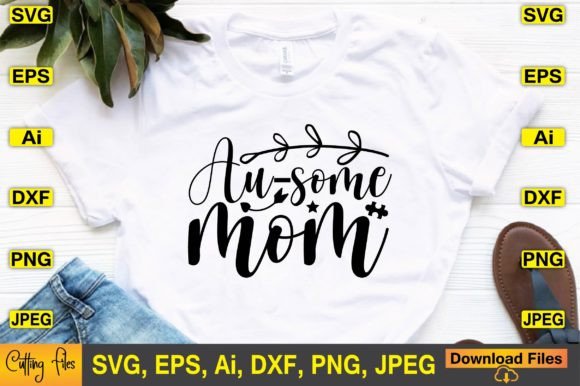
The initial mood of the Au-some Mom SVG Design is one of warmth, advocacy, and gentle pride. Visually, it balances playfulness with sincerity, avoiding overly clinical or sterile aesthetics often associated with awareness themes. The typography and iconography work together to create a sense of community rather than isolation. For an Etsy seller or small shop product creator, this emotional connection is vital. Customers purchasing items related to neurodiversity are looking for validation and support, not just a logo. The design’s layout suggests a centered, balanced composition that would naturally suit the chest placement on a sweatshirt embroidery project or the center panel of a tote bag design.
From a technical standpoint, the vector lines appear clean, which is promising for digitizing. However, because this is originally intended as a cutting file, the shapes may be solid without inherent stitch direction logic. As a reviewer, I immediately look for potential density issues. Solid fills in SVGs can become bulletproof patches if converted directly to fill stitch without proper underlay or density reduction. The charm of this design lies in its simplicity, and preserving that lightness during the digitization process is key to maintaining its friendly personality.
Real-World Application: Stitching a Custom Tote Bag
To truly evaluate this asset, I mentally walked through creating a custom canvas tote bag for a local autism support group fundraiser. This scenario tests both durability and aesthetic clarity. Canvas is a forgiving fabric, but it has texture. If the Au-some Mom SVG Design features intricate internal details or tiny text elements, they risk getting lost in the weave of the canvas or causing excessive thread breaks.
In this real-life application, I would likely adapt the design into a mixed-media approach. Using the SVG as a guide, I might employ a running stitch outline for the main lettering to keep the bag lightweight and flexible, reserving satin stitch only for key accent elements like hearts or puzzle pieces. This prevents the "heavy patch" feel that makes tote bags stiff and unappealing. For the color palette, high contrast is non-negotiable. A white or cream thread on a navy canvas ensures readability from a distance. This practical adjustment transforms a flat graphic into a textured, professional finished product that honors the message while respecting the medium.
Navigating Fabric Challenges and Hoop Limitations
While the Au-some Mom SVG Design is versatile, it demands caution when applied to challenging substrates. Small hoop size constraints are the first hurdle. If you are working with a 4x4 hoop, you must verify that the design’s aspect ratio allows for legible text at that scale. Shrinking complex SVGs often results in illegible letters and overlapping stitches. I strongly advise against using this specific design for baby onesies or stretchy knits unless you have significant experience with knit stabilizers. The tension required to hold the design stable on stretchy fabric can distort the shape, turning a heartfelt message into a warped graphic.
Dark fabrics present another consideration. If the design relies on negative space or thin lines, it may disappear on black or charcoal garments. You may need to add a knockdown stitch or a background fill to make the design pop, which increases stitch count significantly. Furthermore, curved surfaces like caps are generally unsuitable for this specific layout unless the design is specifically re-digitized for a curved field. Attempting to force a flat SVG-based embroidery file onto a structured cap usually leads to registration errors and puckering. Stick to flat, stable surfaces like tea towels, pillow covers, or quilt blocks for the best results.
Commercial Viability and Brand Consistency
For creative entrepreneurs and apparel decorators, the value of the Au-some Mom SVG Design extends beyond a single project. It offers strong potential for brand consistency across a product line. Imagine offering a matching set: a mom’s sweatshirt, a sibling’s t-shirt, and a nursery pillow cover. The design’s scalable nature allows for this cohesion. However, professionalism dictates that you test your adaptations thoroughly. Customer trust is built on quality; a frayed edge or poor color contrast on a personalized gift can damage your reputation instantly.
When listing these items, use accurate printable mockup previews that reflect the actual stitched texture, not just the digital vector. Buyers need to see how the thread colors interact with the fabric texture. Clearly state whether the item uses appliqué, satin, or fill stitches so customers know what to expect regarding hand-feel and washability. This transparency reduces returns and builds long-term loyalty in the commercial embroidery sector.
Critical Designer Notes for Safe Execution
Before you commit this design to a sellable product or a cherished gift, please adhere to these practical guidelines derived from professional testing standards:
- Verify Licensing: Since this is marketed as a digital download for cutting files, confirm explicitly that the license permits machine embroidery use and commercial sale of finished physical goods. Do not assume cross-platform rights.
- Test on Scrap Fabric First: Never stitch directly onto a final garment without a test run. Use a scrap piece of the exact same material and stabilizer combination you plan to use for the final product.
- Check Stitch Density: If auto-digitizing from the SVG, reduce density settings. Standard cutting files do not account for thread buildup. Aim for a lighter touch to preserve fabric drape.
- Evaluate Text Legibility: Ensure all lettering is at least 6mm tall after resizing. Anything smaller risks becoming unreadable bobbin nests.
- Contrast Testing: View your digitized file in grayscale or black and white within your software. If the design lacks definition without color, it will fail on low-contrast fabric combinations.
- Stabilizer Selection: Match the stabilizer to the fabric weight, not the design size. Heavy designs on light fabric require cut-away backing; light designs on heavy fabric may only need tear-away.
- Wash Test: If selling custom apparel or baby items, wash and dry your test sample three times. Check for thread shrinkage, color bleeding, or stabilizer residue.
Final Thoughts on Design Adaptation
The Au-some Mom SVG Design holds genuine promise for makers who understand the translation between digital graphics and textile art. Its strength lies in its emotional clarity and adaptable layout, making it suitable for everything from holiday embroidery gifts to year-round advocacy wear. However, success depends entirely on the maker's willingness to treat the SVG as a starting point rather than a final instruction. By respecting the limitations of thread and fabric, and by prioritizing technical execution alongside sentimental value, you can transform this digital asset into a meaningful, high-quality embroidered product that resonates deeply with its intended audience. Always prioritize the integrity of the stitch over the speed of production, and your work will reflect the care that the autism community deserves.